Peas in a Pod Pattern 2894: A Thoughtful Guide for Crafters and Designers
If you’ve stumbled upon Peas in a Pod Pattern 2894, you’re likely drawn to its clean, playful aesthetic — and for good reason. This digital pattern is part of a broader collection designed with versatility and usability in mind. It’s not just another clipart-style graphic; it’s a carefully crafted, scalable design resource intended for real-world creative work — from sewing projects and print-on-demand products to classroom visuals and small-batch merchandise. What makes it especially useful is how it bridges the gap between simplicity and professional-grade output.
What People Often Misunderstand About Peas in a Pod Pattern 2894
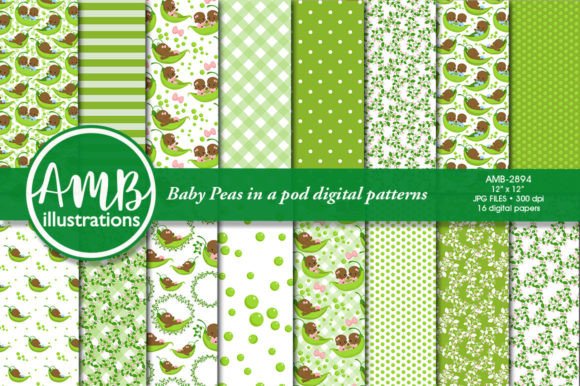
One common assumption is that “pattern” here means a repeatable textile swatch — like something you’d use directly in fabric printing software. In reality, Peas in a Pod Pattern 2894 refers to a single, standalone motif layout, saved as individual 12” x 12” JPEG files at 300 dpi. That distinction matters. If you’re expecting an infinitely tileable vector or seamless PNG, you’ll need to adjust your workflow — or choose a different asset. Confusing this early can lead to wasted time resizing, reformatting, or troubleshooting alignment issues later.
Another frequent oversight? Assuming resolution alone guarantees print readiness. Yes, each file is 300 dpi — but only at 12” x 12”. Enlarging beyond that without resampling risks pixelation. Shrinking significantly (e.g., for a tiny embroidery hoop or label) may cause fine details — like subtle stem curves or pod outlines — to blur or disappear entirely. Always preview at your intended final size before cutting, stitching, or sending to print.
Why File Format and Intent Matter More Than You Think
The fact that each paper is saved separately as a JPEG — not PDF, SVG, or layered PSD — has practical implications. JPEGs are excellent for consistent color rendering and broad software compatibility (Photoshop, Canva, Affinity Photo, even basic paint programs), but they don’t support transparency or editable layers. So if your project requires drop shadows, color swaps, or precise masking (say, for heat-transfer vinyl or laser-cut stencils), plan ahead: you’ll need to manually create those elements or convert the file using your image editor.
For example, a small business owner designing toddler bibs might assume they can drag-and-drop the JPEG into their Cricut Design Space and cut it out cleanly. But without a transparent background or vector path, they’ll get a white border around each pod — unless they spend extra time removing it. A better approach? Open the JPEG in a program like GIMP or Photoshop, use the magic wand or select subject tool to isolate the motif, then export as PNG with transparency. It adds two minutes — but saves frustration during production.
Choosing the Right Use Case — and Avoiding Mismatched Expectations
Peas in a Pod Pattern 2894 shines brightest when used intentionally — not as a generic filler, but as a cohesive visual anchor. Its charm lies in consistency: same scale, same spacing, same whimsical yet balanced composition across all papers. That makes it ideal for themed collections — like a set of matching pillow covers and coordinating pajama tops — where visual harmony matters more than variety.
Where it falls short? As a primary font replacement, photo overlay, or complex collage base. Its design isn’t meant to compete with busy backgrounds or high-contrast text. Trying to layer it over a dense floral photo or use it as a watermark often drowns out its gentle rhythm. Instead, pair it with soft solids, light textures, or ample negative space. A blogger creating printable nursery decor, for instance, gets stronger results using one motif per page — centered, sized thoughtfully — rather than tiling four versions into a grid and calling it “a pattern pack.”
Before You Download or Buy: Three Practical Checks
- Confirm your software supports JPEG placement at full resolution. Some free or mobile apps compress imports automatically — check export settings or test with a sample file first.
- Ask yourself: Do I need scalability beyond 12 inches? If you’re designing a mural, large banner, or custom wallpaper, consider whether this motif’s detail level holds up — or if pairing it with complementary graphics would serve you better.
- Review licensing terms — quietly but carefully. While many Peas in a Pod Papers are cleared for personal and small-business use, commercial redistribution (e.g., selling the JPEGs as-is or bundling them unchanged into a craft kit) may require separate permission. When in doubt, contact the creator directly — most respond within 48 hours.
Better Workflows Start With Intentional Use
You don’t need advanced skills to get great results from Peas in a Pod Pattern 2894 — just clarity about what it does well. For sewists, try printing one motif on iron-on transfer paper and applying it to a plain cotton pillow cover. For educators, import the JPEG into Google Slides, ungroup (if supported) or copy-paste multiple instances to build a counting activity — three peas, five pods, etc. Freelance designers might use it as a subtle background texture behind client testimonials on a website mockup, adjusting opacity to 15–20% for quiet sophistication.
The key is resisting the urge to overcomplicate. One motif, well-placed, often communicates more than ten scattered variations. And because each paper is saved separately, you’re never forced to crop or delete unwanted elements — just open the version that fits your layout and go.
A Final Note on Enjoyment — Not Just Execution
“Peas in a Pod Papers were super fun to create” isn’t just marketing language — it reflects a design philosophy rooted in joy and accessibility. These aren’t sterile assets built for algorithms; they’re made for hands-on making, slow crafting, and thoughtful iteration. That’s why so many users report returning to Peas in a Pod Pattern 2894 again and again: it works, it adapts, and it doesn’t ask you to become an expert to use it well.
So yes — make pillows. Sew toddler clothing. Design bibs and pyjamas. Print wall art or party invites. But also pause and notice how the curves echo, how the spacing breathes, how even something simple can feel intentional. That’s where the real value lives — not just in the pixels, but in the care behind them.