Cowboy: A Thoughtful Choice for Halloween Digital Paper Backgrounds
When selecting digital paper backgrounds for seasonal crafting—especially around Halloween—practicality, versatility, and visual cohesion matter more than novelty alone. Cowboy stands out not as a flashy trend but as a considered resource: a curated pack of 10 seamless, high-resolution patterns designed specifically for creative flexibility. Unlike generic clipart bundles or algorithmically generated textures, Cowboy delivers intentional design—patterns that balance thematic resonance with broad usability across projects like invitations, scrapbook layouts, printable party décor, and custom gift tags.
What Makes Cowboy Distinct in the Digital Paper Landscape
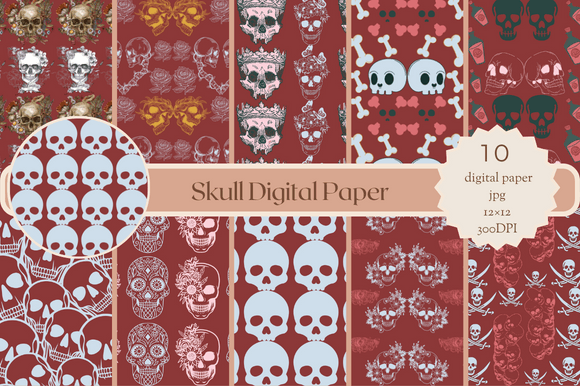
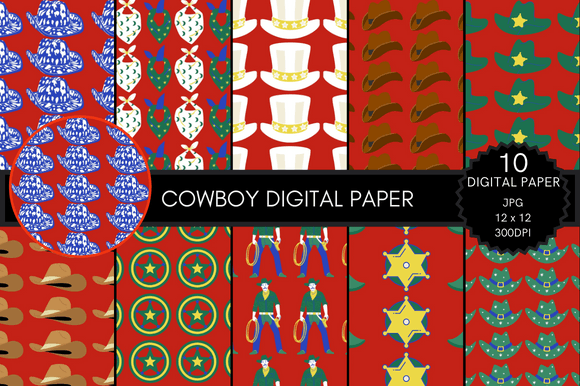
Cowboy isn’t software, a subscription service, or a marketplace—it’s a focused, downloadable asset pack. Its distinction lies in execution: each of the 10 patterns is built to scale without visible seams, rendered at 3600×3600 pixels (12×12 inches at 300 DPI), and saved in JPG format for universal compatibility. That resolution ensures crisp printing on physical media—no pixelation when scaled down for a 5×7 invitation or enlarged for a 24×36 banner. The patterns themselves avoid over-saturation with clichéd motifs: instead of relying solely on jack-o’-lanterns or cobwebs, Cowboy integrates subtle textures—woven twill, crosshatched burlap, stippled chalkboard, and muted plaid—that nod to autumn and Americana without locking users into one narrow aesthetic.
This restraint supports longevity. While some Halloween-themed packs feel dated by mid-October, Cowboy’s palette leans into deep ochres, charcoal greys, burnt umber, and off-white—colors that transition naturally into Thanksgiving or even general fall crafting. That adaptability matters for creators who invest time in learning a tool or building a template library; it reduces the need to source new assets every season.
How Cowboy Compares Across Common Use Cases
Digital paper backgrounds serve different needs depending on context. Here’s how Cowboy aligns—or diverges—across typical applications:
- Scrapbooking & Memory Keeping: Seamless tiling means no awkward repeats when layering photos or journaling cards. Because all patterns are uniform in resolution and DPI, mixing Cowboy papers with other 300-DPI assets (like digital stamps or photo overlays) maintains consistent print quality—unlike lower-resolution PNGs or web-optimized JPEGs that may blur or misalign.
- Invitations & Printable Stationery: The 12×12-inch size allows full bleed printing on standard craft paper or cardstock. Designers using Canva, Adobe Express, or Affinity Publisher can drop a Cowboy background into a layout and crop confidently—no risk of cut-off edges or stretched distortion. Compare this to tileable SVGs or vector swatches that require manual tiling or scaling adjustments before export.
- Craft Projects (e.g., paper bags, gift boxes, labels): High DPI ensures clean laser or inkjet output even on textured surfaces like kraft paper. Some free pattern libraries offer only 72-DPI web graphics—fine for screen use but unsuitable for sharp printed text or fine-line borders. Cowboy avoids that limitation entirely.
- Digital Collage or Social Media Graphics: While primarily intended for print, the resolution also benefits digital reuse. A single pattern can be cropped to fit Instagram Story dimensions (1080×1920) or Pinterest pins (1000×1500) without loss of fidelity—something lower-resolution alternatives struggle with.
Tradeoffs to Consider Before Choosing Cowboy
No digital paper pack fits every workflow—and Cowboy is no exception. Its strengths come with practical boundaries worth acknowledging.
First, it offers JPGs only—not layered PSD files, editable vectors (AI/SVG), or transparent PNGs. That means you can’t easily isolate pattern elements or recolor individual components. If your process relies heavily on color customization (e.g., matching brand palettes or adjusting contrast for accessibility), you’ll need basic photo editing software to tweak tones post-download. This isn’t a flaw, but a format choice aligned with simplicity and broad compatibility—not granular control.
Second, Cowboy provides patterns—not themed illustrations or ready-made templates. You won’t find pre-designed “Happy Halloween” banners or RSVP cards inside the pack. It assumes users have a baseline comfort level with design tools and prefer foundational assets over finished products. That’s ideal for intermediate crafters or small-business owners building their own brand consistency—but less suited for beginners seeking plug-and-play solutions.
Third, while the patterns are Halloween-adjacent, they’re intentionally restrained. If your project demands overt iconography—a ghost motif repeated across every inch, for example—Cowboy may feel too understated. Other resources specialize in bold, illustrative repetition; Cowboy prioritizes texture, rhythm, and subtlety.
When Cowboy Is Likely the Right Fit
Cowboy works best for creators who value consistency, scalability, and quiet sophistication over immediate visual impact. Consider it if:
- You regularly print physical crafts and prioritize predictable, professional output—especially on heavier stocks where pixelation becomes obvious.
- You build reusable design systems (e.g., a set of invitation templates you adapt yearly) and want assets that age well beyond October 31st.
- You work across multiple platforms (Canva, Cricut Design Space, Silhouette Studio, InDesign) and need formats that behave predictably without conversion steps.
- You dislike sifting through dozens of near-identical files and prefer a tight, cohesive set where every pattern complements the others tonally and structurally.
A real-world example: A small bakery owner uses Cowboy patterns to design monthly printable menus and seasonal takeout bag liners. She combines the burlap-textured background with hand-lettered specials and minimal line art—achieving a rustic, elevated look that feels handmade but prints cleanly at scale. She reuses the same files for holiday cards and staff appreciation notes, adjusting only typeface and color accents. For her, Cowboy isn’t about Halloween—it’s about reliable, adaptable texture.
When Another Option Might Serve Better
Cowboy may not be optimal if your priority is rapid iteration over precision. For instance:
- If you’re prototyping social media posts daily and need instant color swaps or animated variants, editable vector swatches or CSS-based pattern generators may offer faster iteration.
- If your audience expects highly themed, character-driven visuals (think cartoon bats, candy corn borders, or spooky script fonts), a pack centered on illustration rather than texture would better match those expectations.
- If you’re teaching a beginner workshop and need step-by-step guided templates, a resource with pre-built layers and instructional PDFs would reduce friction more effectively than standalone JPGs.
Also, keep in mind licensing. Cowboy is intended for personal and small-business commercial use—ideal for selling handmade goods or offering design services—but always verify current terms before large-scale distribution or product reselling.
Making an Informed Decision
Choosing digital paper backgrounds isn’t just about aesthetics—it’s about workflow alignment, technical requirements, and long-term utility. Cowboy excels where clarity, consistency, and quiet craftsmanship matter: in print-ready projects, multi-seasonal use, and design systems built to last. It doesn’t try to be everything. Instead, it does a specific set of things exceptionally well—seamless tiling, high-fidelity output, thoughtful color and texture pairing, and format reliability.
That focus makes it easier to evaluate alongside alternatives. Ask yourself: What’s my primary output medium? How much time do I spend adjusting assets versus designing? Do I value cohesion across projects—or variety within a single theme? Cowboy answers those questions with intentionality—not hype, not volume, but precision.