Vintage Similar Star Flower Pattern: Timeless Design for Modern Projects
Whether you're hand-lettering a wedding invitation, designing packaging for an artisanal candle brand, or building a textile collection for a boutique clothing line, the Vintage Similar Star Flower Pattern offers a bridge between nostalgic charm and contemporary versatility. It’s not just another floral motif—it’s a carefully balanced fusion of radial symmetry, botanical softness, and vintage-era craftsmanship, adapted thoughtfully for today’s digital and print workflows.
What Exactly Is a Vintage Similar Star Flower Pattern?
At its core, a Vintage Similar Star Flower Pattern is a repeatable design element that echoes early 20th-century botanical illustrations and textile prints—think pressed wildflowers arranged in star-like formations, often with delicate linework, subtle shading, and gentle asymmetry. Unlike rigid geometric repeats, these patterns retain organic warmth: petals may taper slightly, stems curve with quiet intention, and spacing feels hand-drawn rather than algorithmically perfect.
“Similar” in the name signals something important: this isn’t a single copyrighted motif, but a family of harmonious variations. That means designers get flexibility—not just one rigid layout, but a cohesive set of motifs (centered blooms, corner accents, seamless tiles, border bands) that share the same visual language. This makes it easier to scale across projects without visual fatigue or mismatched tones.
Why This Pattern Resonates Across Audiences
Different users find different value in the Vintage Similar Star Flower Pattern, and that’s by design:
- Crafters & hobbyists appreciate its clarity at small scales—ideal for embroidery transfers, rubber stamp carving, or laser-cut paper ornaments.
- Small business owners use it to unify branding: a subtle pattern on business cards pairs seamlessly with the same motif enlarged as a background on Instagram posts or product labels.
- Graphic designers rely on its multi-format availability (JPG, EPS, SVG, PNG) to drop into layouts without reworking resolution or color modes.
- Print-on-demand creators benefit from its clean vector outlines (EPS/SVG), which scale flawlessly on mugs, tote bags, or wall art—no pixelation, no guesswork.
Key Characteristics That Set It Apart
Not all vintage-inspired florals are created equal. Here’s what makes this pattern especially practical:
- Optimized for reproduction: Line weights are consistent enough for crisp printing at 300 dpi, yet retain expressive variation for screen display.
- Color-agnostic structure: Built in black-and-white or grayscale first, so it adapts effortlessly to any palette—pastel washes, deep indigo backgrounds, or monochrome stationery.
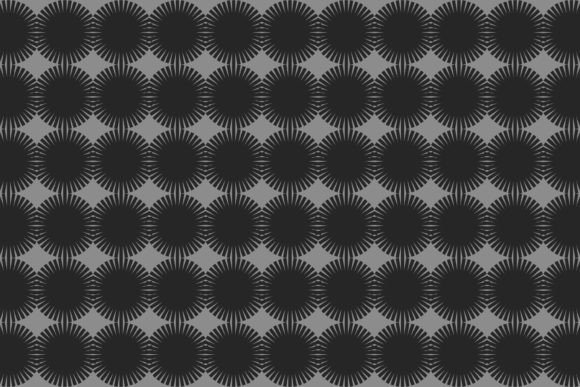
- Seamless tiling capability: The core tile unit aligns cleanly edge-to-edge, eliminating visible seams when repeated across fabric, wallpaper, or web backgrounds.
- Intentional imperfection: Slight irregularities in petal length or stem curvature prevent robotic repetition—giving digital outputs a hand-finished feel.
Real-World Uses You Can Start With Today
You don’t need a big budget or complex software to begin. Here are everyday applications where the Vintage Similar Star Flower Pattern delivers immediate impact:
- Stationery suites: Use the SVG version to layer a faint pattern behind handwritten calligraphy on thank-you cards—or invert it as a white-on-kraft motif for eco-friendly packaging.
- Social media templates: Drop the PNG (with transparent background) into Canva or Figma to create cohesive story highlights, post dividers, or watermark overlays.
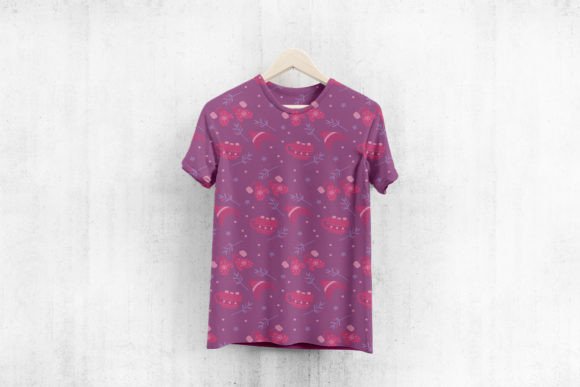
- Apparel & accessories: Import the EPS file into Adobe Illustrator, adjust spacing for fabric width, and send directly to your DTG printer or embroidery digitizer.
- Web design accents: Convert the SVG to inline code for lightweight, responsive background textures on landing pages or blog headers—no HTTP requests needed.
- Educational materials: Teachers use the JPG version in printable worksheets about symmetry, botany, or art history—clear enough for student tracing, rich enough for classroom projection.
What to Keep in Mind Before You Download
While versatile, the Vintage Similar Star Flower Pattern works best when matched to realistic expectations:
It’s not photorealistic. If you need hyper-detailed botanical accuracy (vein-level texture, botanical Latin names embedded), look for scientific illustration assets instead. This pattern prioritizes rhythm and harmony over taxonomic precision.
It’s not ultra-minimalist. Though refined, it carries gentle complexity—ideal for audiences who appreciate craft, but potentially overwhelming in ultra-sparse UI contexts (e.g., fintech dashboards). Consider using only a single isolated bloom as an icon if minimalism is essential.
File formats serve different roles:
- JPG: Best for quick mockups, email graphics, or social posts where transparency isn’t needed.
- PNG: Use when you need crisp edges and transparency—ideal for logos, app icons, or layered designs.
- SVG: Choose this for web backgrounds, scalable icons, or editing in browsers or design tools like Figma.
- EPS: The go-to for professional print production—compatible with older RIP systems and large-format printers.
How to Evaluate Fit for Your Project
Ask yourself three questions before committing:
- Is legibility critical at small sizes? Test the pattern at 0.25″ height—if stems and petals remain distinguishable, it’s likely suitable for fine-detail work like book endpapers or jewelry tags.
- Does your brand voice lean warm, human, and intentional? This pattern supports brands that say “thoughtfully made,” not “mass-produced efficiency.” If your messaging centers speed, automation, or stark modernity, consider pairing it selectively—not as a primary motif.
- Do you need customization? Since it’s delivered in editable vector and raster formats, you can recolor, rotate, crop, or combine elements freely—no licensing restrictions for derivative work in most standard licenses.
A Pattern That Grows With You
One of the quiet strengths of the Vintage Similar Star Flower Pattern is its ability to evolve alongside your work. A freelance designer might start by using a single tile as a website divider, then later adapt the same motif into a custom foil-stamped business card. A pottery studio could begin with a simple PNG overlay on product photos, then commission a ceramic decal using the EPS file for physical glaze application.
That adaptability isn’t accidental—it reflects how the pattern was built: with intention for reuse, respect for material constraints (paper grain, fabric weave, screen pixels), and awareness that today’s side project might become tomorrow’s signature collection.
In a landscape saturated with generic clipart and AI-generated “vintage” filters, the Vintage Similar Star Flower Pattern stands out by honoring process over polish. It doesn’t try to be everything—it simply does what it does well: bring quiet elegance, structural reliability, and human-centered detail to projects that matter.